
The Lord’s Supper is not a bare ceremony, nor is its administration a matter of personal creativity. Christ has instituted this sacrament for the good of His Church, and the Church is called to administer it carefully, reverently, and pastorally. And the BCO recognizes that not every congregation is in the same circumstance. Sessions must make wise judgments about frequency, preparation, invitation, distribution, and the pastoral care of communicants and non-communicants.
BCO 58 is not merely about “how to do communion.” It is about how Christ feeds His people, how elders oversee the Table, how ministers explain the gospel signified in bread and wine, and how the whole congregation is called to come with faith, repentance, thanksgiving, and hope.
Don’t forget you can hear discussions of these chapters on recent episodes of Polity Matters.
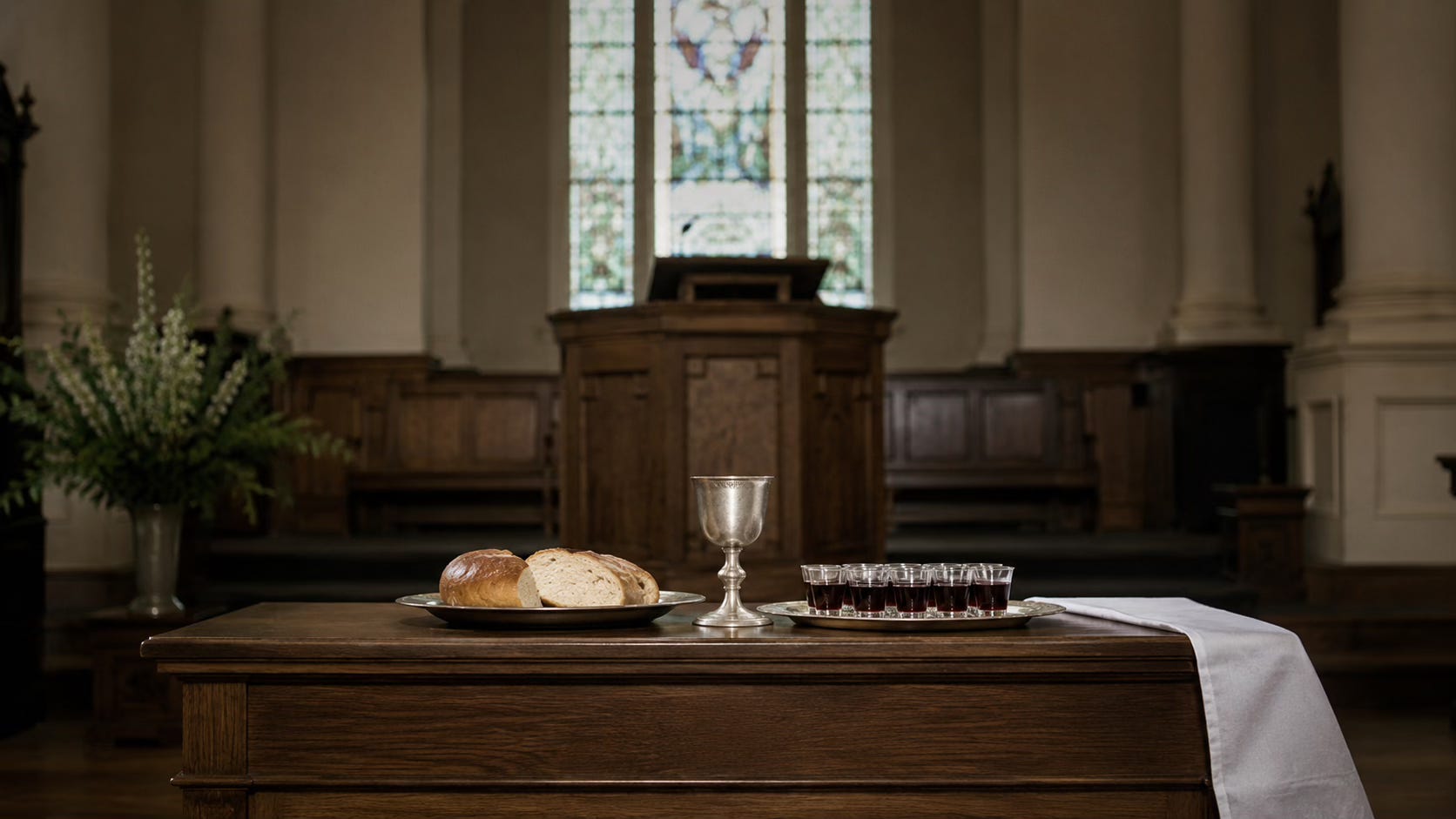
Frequently, and for Edification
The chapter begins directly: “The Communion, or Supper of the Lord, is to be observed frequently; the stated times to be determined by the Session of each congregation, as it may judge most for edification.”
The BCO does not define “frequently.” The PCA does not prescribe weekly communion, monthly communion, quarterly communion, or some other fixed schedule. Instead, the Session of each congregation is charged to determine the stated times “as it may judge most for edification.”
The question is not merely, “How often do we prefer to have the Supper?” Nor is it, “What is the newest trend?” Nor even, “What schedule makes the most practical sense for the people preparing the elements?” Those questions may be part of the discussion, but the central question is: What will most edify this congregation?
There are good arguments for greater frequency. The Supper is a means of grace. It is not a mere memorial in the sense of mental recollection only. Christ uses it to nourish the faith of His people. If the Supper strengthens believers, supports them under trouble, encourages them in duty, increases faith, and gives peace of conscience, then we should want the people of God to receive it often.
At the same time, frequency is a circumstance of worship governed by wisdom, prudence, and the condition of the congregation. Some churches may be able to administer the Supper weekly with reverence, clarity, and care. Others may find that weekly communion becomes rushed, tacked on, or treated as ordinary in the worst sense. Some larger congregations face practical issues of time, preparation, and distribution. Smaller churches without a regular minister may struggle to observe the Supper as often as they desire. In those cases, Sessions should not simply accept long neglect as inevitable, but should seek appropriate ministerial help so the congregation is not deprived of the sacrament.
The Supper belongs to the gathered Church. It is not a private ritual or an ad hoc devotional act. It is administered under the oversight of the elders in the public worship of God. That is one reason the Session determines its stated times. The Table is not the possession of the minister, nor of individual members, nor of families. It belongs to Christ, and Christ has entrusted its oversight to the Church.
Guarding the Table
BCO 58-2 says, “The ignorant and scandalous are not to be admitted to the Lord’s Supper.”
The Lord’s Supper is not evangelistic in the way the preached Word is evangelistic. Unbelievers should hear the Word. They should be urged to repent and believe in Christ. They should remain in the service and observe the Supper. But they should not receive the bread and wine as though they are already communing with Christ by faith.
The same is true for those who are “ignorant” or “scandalous.” These are not terms meant to be harsh or insulting. The “ignorant” are those who do not understand the gospel or the nature of the Supper. This includes children who have not yet made a credible profession of faith and others who, for whatever reason, are unable to discern what is being signified and sealed. The “scandalous” are those whose lives are marked by open, unrepentant sin inconsistent with a credible profession of faith.
This is why fencing the Table matters. The minister does not fence the Table to keep weak believers away. He fences it to warn the unbelieving, the unrepentant, and the self-deceived, while encouraging weary Christians to come to Christ for strength. There is a world of difference between the scandalous sinner who refuses repentance and the struggling believer who hates his sin and desires more grace.
The Supper is not for the self-satisfied. It is for those who know they need Christ. The doubting believer who sincerely desires to belong to Christ should not be driven away from the Table. He should be encouraged to come, not because his faith is strong, but because Christ is strong. The Table is not a reward for the spiritually impressive. It is food for the hungry, medicine for the weak, and comfort for those who cling to Christ.
Preparing for a Holy Feast
BCO 58-3 says public notice should be given to the congregation at least the Sabbath before the administration of the Supper, and that the people should be instructed in its nature and in due preparation “that all may come in a suitable manner to this holy feast.”
The Supper is not a bare ritual. It is not a gloomy exercise in religious introspection. It is a feast. But it is a holy feast, and therefore we should prepare.
Preparation does not mean morbid self-examination. It does not mean that communicants must spend the week trying to remember every sin they have ever committed so they can decide whether they are worthy enough to come. No one comes because he is worthy in himself. We come because Christ is worthy, and because He invites sinners who trust in Him.
Still, preparation is real. We examine ourselves. We consider whether we are living in repentance and faith. We seek reconciliation with brothers and sisters where needed. We confess sin. We pray for grace. We teach our children what is coming. We remind ourselves that Christ is about to set before us the visible signs of His broken body and shed blood.
In a busy age, many Christians need help preparing. A notice in the bulletin may not be enough. A reminder in the pastoral prayer, a brief word the week before, a family worship emphasis, a devotional email, a Wednesday evening meditation, or a preparatory service can all help the congregation come thoughtfully and expectantly.
BCO 58-8 even urges congregations, according to past Presbyterian custom, to have a service of spiritual preparation during the week before the celebration of the sacrament. That may sound foreign to many of us, but the impulse is worth recovering. Whether or not a congregation holds a formal preparatory service, we should want to recover the seriousness and sweetness of coming to the Table intentionally.
The Words of Institution and the Benefits of the Supper
BCO 58-4 instructs the minister, after the sermon, to show that the Supper is an ordinance of Christ by reading the words of institution from one of the Gospels or from 1 Corinthians 11. This is not optional ornamentation. The Supper must be connected to Christ’s own appointment. We do not invent the sacrament. We receive it.
The placement after the sermon is also significant. The Supper is joined to the ministry of the Word. The preached Word explains and proclaims the gospel; the sacrament confirms and seals it. The Table does not compete with the pulpit. It depends upon the Word. The bread and wine are not mute religious objects. They are sacramental signs interpreted by Christ’s institution and received by faith.
BCO 58-4 also gives ministers a rich description of the Supper’s benefits. It is to be observed in remembrance of Christ, to show forth His death until He comes. But it is also “of inestimable benefit” to strengthen God’s people against sin, support them under troubles, encourage and quicken them in duty, inspire love and zeal, increase faith and holy resolution, and beget peace of conscience and comfortable hopes of eternal life.
That reminds us that Christ is ministering to His people. He strengthens tempted saints. He supports suffering saints. He stirs sluggish saints. He increases faith. He gives peace of conscience. He sets before us the hope of eternal life.
A good fencing of the Table should therefore include both warning and invitation. It should warn those who should not come, but it should also warmly call believers to come. The minister should not speak as though the Supper is mainly dangerous. It is dangerous to come unbelievingly or impenitently. But to believers, it is a gift of inestimable benefit.
Whom Do We Invite?
BCO 58-4 provides two possible forms of invitation. At the discretion of the Session, the minister may invite all those who profess the true religion and are communicants in good standing in any evangelical church. Or he may invite those who have been approved by the Session after giving indication of their desire to participate.
Many PCA members may be surprised by that second option. We are accustomed to hearing an invitation to members in good standing of evangelical churches. But BCO 58 also permits a more closely guarded practice, in which the Session approves those who may come.
The point is not to be harsh, suspicious, or inhospitable. The point is that the elders are responsible to guard the Table. Sessions may differ in how they apply that responsibility, but they may not abandon it. The Supper is a communion of saints, and those who come are professing not only personal faith in Christ but also visible fellowship with His Church.
The chapter also says it is proper to give “a special invitation to non-communicants to remain during the service.” That is a lovely pastoral note. Non-communicants are not to be dismissed as though the Supper has nothing to do with them. Covenant children, visitors, unbelievers, and those not yet admitted to the Table should remain. They should watch. They should listen. They should see Christ set forth in the sacrament.
For covenant children especially, this matters. Even when they do not yet partake, they are learning. They are seeing the gospel dramatized before them. They are being taught to ask, “Why do we do this?” And parents and elders should be ready to answer.
Reverence, Oversight, and Distribution
BCO 58-5 gives practical directions for the Table, the elements, the elders, the prayer of thanksgiving, the breaking of bread, and the giving of the cup. Some of the language may sound old-fashioned: the table is to be “decently covered,” communicants are to sit “orderly and gravely,” and the elders are to be in a convenient place together. But the instincts are sound.
The Supper should be administered reverently. Not stiffly. Not theatrically. Not superstitiously. This is a holy feast. The elements are common bread and wine until set apart by prayer and thanksgiving, but they are not to be treated casually. The minister acts in Christ’s name. The elders are visibly involved. The congregation receives in an orderly manner.
The presence of the elders is important. The Supper is not merely a ministerial performance. It is an act of the Church under the oversight of those charged to shepherd the flock. When the elders distribute the elements, they visibly represent the care and government of Christ’s Church.
The directions also assume that bread and cup are distributed distinctly. This is one reason many Presbyterians have objected to intinction. The biblical and confessional pattern is eating the bread and drinking the cup. The Supper is not improved by clever shortcuts. The ordinary actions matter: taking, blessing, breaking, giving, eating, drinking.
Personal Communion, Not Passive Reception
BCO 58-6 says that, since believers are to act personally in all their covenanting with the Lord, part of the time during distribution should be spent in “silent communion, thanksgiving, intercession and prayer.”
Receiving the Supper is not passive. We are not spectators waiting for the tray to reach us. We are personally engaged with the Lord. We receive by faith. We give thanks. We pray. We commune with Christ spiritually.
This silent communion also reminds us that the Supper is both corporate and personal. We eat one bread as one body, but each believer must feed upon Christ by faith. The congregation gathers together, but no one can believe for another. The Table calls each communicant to renewed personal dealing with the Savior.
After the Supper: Encouragement, Warning, Thanksgiving
BCO 58-7 directs the minister, after the distribution, to remind communicants of the grace of God in Christ held forth in the sacrament and of their obligation to be the Lord’s. They are to walk worthy of their calling, to walk in Christ, and to maintain good works.
Having received Christ sacramentally, we are exhorted to live as those who belong to Him. Grace creates obligation. Communion with Christ bears fruit in obedience.
The minister may also address those who were only spectators, reminding them of their duty and calling them to prepare to attend upon the ordinance at the next celebration. Again, the point is not to embarrass, but to pastor. The Supper preaches even to those who do not partake. It says: Christ has died. Christ feeds His people. Christ calls you to Himself. Do not remain far off.
Finally, the minister is to pray and give thanks. The prayer described in BCO 58-7 is remarkably rich. It thanks God for His mercy, asks pardon for the defects of the whole service, prays for acceptance in Christ, seeks the assistance of the Holy Spirit, and asks that believers would walk in a manner worthy of the gospel.
That petition for pardon is striking. We confess that our best services are imperfect. We need mercy not only for our sins outside worship, but for the defects of our worship itself. Yet we pray with confidence, because our acceptance is in Christ.
The chapter ends with singing and a gospel benediction from Hebrews 13: “Now the God of peace, that brought again from the dead our Lord Jesus, that great Shepherd of the sheep, through the blood of the everlasting covenant, make you perfect in every good work to do His will…”
That is a fitting end to the Supper. The Table sends us out under the blessing of the risen Shepherd, through the blood of the everlasting covenant, equipped to do what is pleasing in His sight.
Conclusion
BCO 58 is detailed, sometimes awkwardly worded, and very Presbyterian. But underneath its directions is a deeply pastoral vision of the Lord’s Supper. Christ has given His Church a holy feast. He calls elders to guard it, ministers to explain it, communicants to receive it by faith, non-communicants to consider it seriously, and the whole congregation to behold in it the grace of God in Jesus Christ.
The Supper is not a mere add-on to worship. It is not a ritual interruption. It is not a bare memorial. It is Christ’s appointed means for strengthening His people, comforting troubled consciences, increasing faith, stirring love and zeal, and holding before us the hope of eternal life.
So we should come carefully. We should come reverently. We should come repentantly. But above all, believers should come gladly. For at the Table, Christ does not merely remind us that He once gave Himself for us. He ministers to us now, feeding us by faith upon His body and blood, until the day when faith becomes sight and the holy feast gives way to the marriage supper of the Lamb.